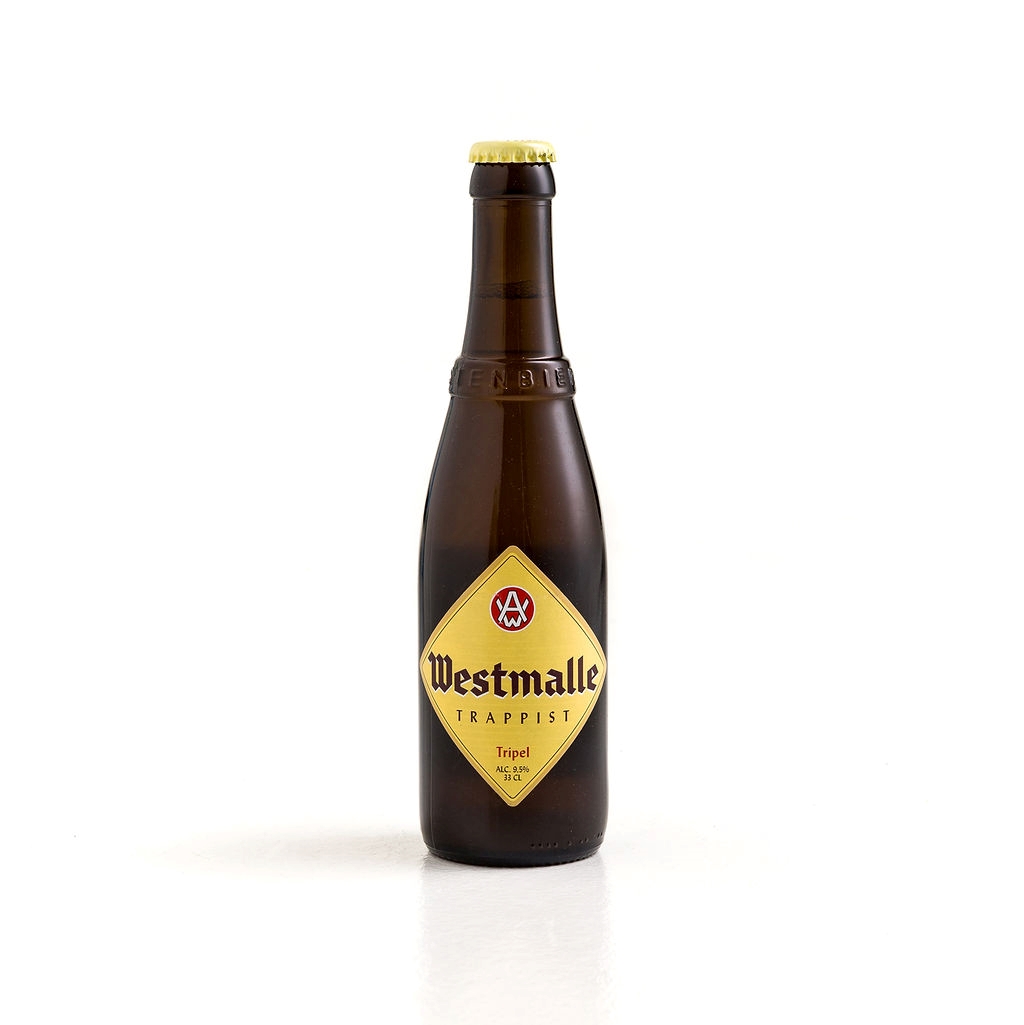
Trappist Tripel · 9.5% ABV. Elegant golden tripel with ripe banana, fruity yeast, herbal hops and a long dry, gently bitter finish.
Tasting Notes
Elegant golden tripel with ripe banana, fruity yeast, herbal hops and a long dry, gently bitter finish.
Production Method
Top-fermented Trappist beer with secondary fermentation in the bottle.
Food Pairing
Roast chicken, fish, strong cheese and rich seafood dishes.
Every beer style has its own character. Serving temperature and glassware influence how you experience malt, hops, yeast aromas and texture.
Lagers and pilsners are generally served at 4–7°C, wheat beers at 6–9°C, IPAs and Belgian ales at 8–12°C, and strong dark ales at 10–14°C. Follow the brewery’s serving advice when available.
Use a clean glass: a tall lager glass for pilsners, a weizen glass for wheat beer, or a tulip glass for Belgian ales. Pour at an angle, then straighten the glass to build a moderate foam head.
Notice malt, bread, caramel, hops, citrus, fruit or spice. Let stronger beers warm slightly to bring out their aromatics.
Different beer styles naturally have different aromasTake a small sip and consider malt sweetness, hop bitterness, acidity, carbonation and body. Notice how the aftertaste develops.
Sour and fruit beers have a different balance from lagers and stoutsLager and pilsner — snacks, fish, fried dishes.
IPA and pale ale — burgers, spicy dishes.
Stout and dark ale — roasted meat, chocolate.
Fruit and sour beer — soft cheese, fruit desserts.
Belgian ales may show spicy yeast character, wheat beers a soft texture, and sour styles pronounced fruit acidity. Bottle-conditioned beers may contain natural yeast sediment.
Sediment can be normal in bottle-conditioned beer
 Русский
 English
 Қазақша


