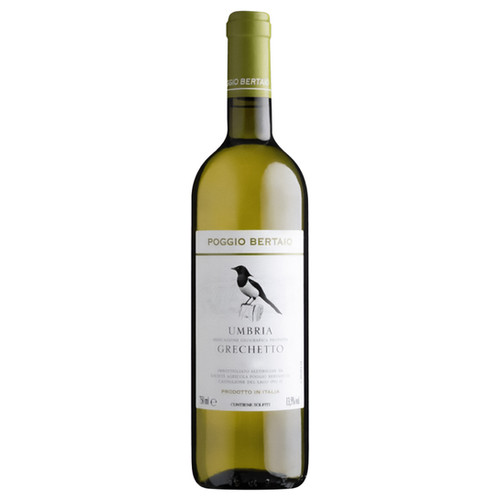
Dry white wine. The palate harmoniously balances between juicy fruit and refreshing acidity, offering notes of green apple and peach that smoothly transition into more complex mineral notes.
Tasting Notes
Fresh, with notes of apples, citrus and floral shades. The taste is balanced, with good acidity, a light fruity finish.
Vineyards
Grapes are grown in Umbria, in an area with a favorable climate and a variety of soils. The soils are predominantly clay with a high limestone content.
Production Method
4 months in steel barrels and 2 months in a bottle.
Hand-picking grapes. Winemaking using traditional methods, with an emphasis on minimal intervention.
Food Pairing
Pairs well with fish, seafood, pasta with light sauces, vegetable salads, as well as white meat.
Wine is not just a drink — it is a whole experience. Its taste is influenced by serving temperature, the glass, aeration, and even how you take your first sip.
The right serving temperature is one of the key factors. Red wines 14–18°C, white wines 8–12°C, sparkling wines 6–8°C.
The best choice is a tulip-shaped glass (350–450 ml) with a narrowed top. Always hold the glass by the stem to avoid warming the wine.
Helps open up aromas and flavours. Red wines — 15–40 min before serving, whites and sparkling wines are served immediately after opening.
Quick tip: gently swirl the wine in the glassFirst sip — small, spread the wine across your palate.
Second sip — assess the balance of sweetness and acidity, fruity and spicy notes.
Before sipping, inhale the wine aroma without swirling, then gently swirl and inhale again. Note fruity, spicy, floral and woody notes.
Reds — meat, pasta, cheese
Whites — fish, seafood, poultry
Sparkling — appetizers to desserts.

 Русский
 English
 Қазақша


